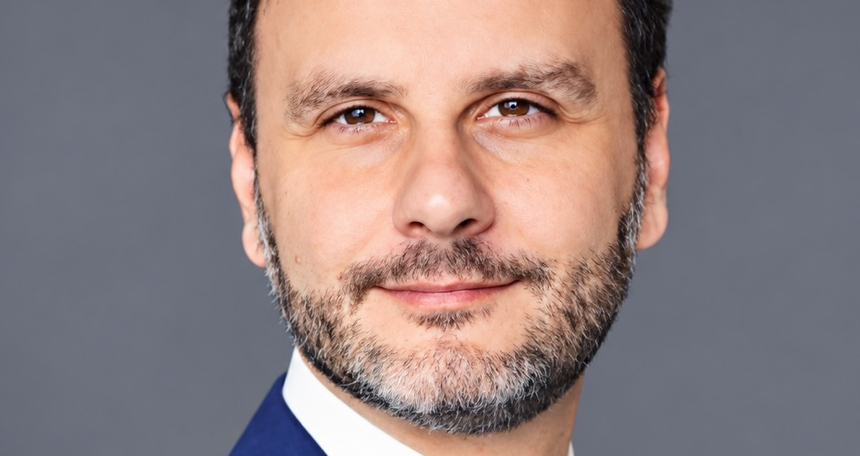
First things first, Paolo, can you tell our readers a little about your background and what brought you to ColCap?
I’ve spent most of my career in banking, working across Italy, France and Australia, predominantly in Sydney. Before joining ColCap, I was a Director in Westpac’s structured finance team, responsible for structuring private and public securitisation transactions for institutional clients.
ColCap was one of Westpac’s key customers, so I was already familiar with the business. In 2022, while ColCap was working towards its acquisition of Molo Tech, I was offered the opportunity to become Treasurer for ColCap UK.
You’ve worked across structured finance, risk and treasury during your career. How has the funding market for lenders changed during that time?
Having worked in the industry both before and after the global financial crisis, I’ve seen considerable changes in how lenders approach funding and risk management. The level of complexity has grown significantly, as has the oversight from regulators, institutional funders and rating agencies.
There are more stakeholders involved in funding decisions, and lenders are expected to demonstrate a greater understanding of the risks within their businesses. One of the biggest changes is the importance of long-term planning, particularly around liquidity and operational risk.
It’s no longer sufficient to look at requirements over the next 12 months. You need to consider what the business might look like in three to five years and whether the funding structures you have today will remain appropriate.
For lenders looking to grow, how important is it to think about funding strategy alongside product and distribution?
It’s absolutely essential, and at ColCap, we’ve approached this differently from how many lenders might traditionally think about growth. Rather than developing a product and then working out how to fund it, we start by considering how we can fund our growth, with product development and distribution decisions following from there.
That has significant implications for the opportunities we’re prepared to pursue. We won’t enter a new product area unless we understand how those assets can be funded over the medium and long term.
For example, if an asset class is unlikely to be refinanced through the capital markets, or a portfolio cannot be disposed of in its entirety, we would question whether it represents a viable growth opportunity. Additional lending volumes are always attractive, but growth needs a funding model that can sustain it.
What do you think makes a lender attractive to an institutional funding partner?
I think institutional funders are paying much closer attention to the quality of the organisation behind the lending. The size and capitalisation of a sponsor remain important, but they’re only part of the assessment.
Funders also want to understand the quality of the management team and how the business approaches risk. They’ll look closely at the procedures and processes in place, particularly the quality of the underwriter and servicer, as these can significantly influence how a portfolio performs over time.
A lender might have an attractive product and a strong pipeline, but that doesn’t necessarily mean its underlying assets will perform as expected. Institutional funding partners need to be comfortable with the people making the lending decisions and the systems supporting them.
We hear a lot about lenders wanting to diversify their funding. What does a healthy funding mix look like, and why is diversification so important?
Different funders have different requirements and appetites for risk, and those preferences can change over time. An institution interested in funding a particular asset class today might take a different view in two or three years.
That could simply reflect the funder’s own priorities or wider market conditions, rather than anything changing within the lender’s business. For that reason, it’s important not to become overly dependent on any single funding partner.
At ColCap, we believe in developing relationships with a suitable mix of domestic and international institutions. Diversification isn’t simply about having as many partners as possible, but understanding what each relationship offers and how those arrangements work together.
ColCap has been looking at opportunities to work with lenders and originators through forward-flow and other funding arrangements. What makes those partnerships work well for both sides?
For us, the quality of the lending partner is fundamental, and we’re particularly interested in businesses with proven underwriting and servicing capabilities within specialist asset classes. They understand their customers and have the experience required to manage those loans effectively.
What ColCap brings is access to wholesale funding and the public capital markets, which may not otherwise be readily available to those businesses. The lender can concentrate on its established expertise while we provide the funding capabilities to support its lending activity.
But both parties need a clear understanding of what they’re trying to achieve. We want to work with lenders that maintain a disciplined approach as their lending volumes increase.
How do you balance providing lenders with the funding to grow while making sure that growth remains disciplined and sustainable?
It starts before any funding arrangement is agreed, because at ColCap, we undertake extensive due diligence on potential lending partners. We approach that process much as a large institutional funder would, examining how the business operates and manages risk.
That scrutiny doesn’t end once the partnership is established, as ongoing oversight and independent checks are important parts of maintaining a successful relationship. We also believe the interests of both parties need to be properly aligned.
We achieve that through shared economic arrangements linked to the performance of the underlying receivables. This gives both ColCap and the lending partner a financial interest in ensuring loans perform as expected, rather than simply concentrating on increasing volumes.
Securitisation remains an important part of the funding model for many non-bank lenders. What role do you see it playing in the UK market over the next few years?
We continue to see public securitisation as the key funding tool for ColCap UK and the wider non-bank lending market for the foreseeable future. It provides access to institutional capital and opportunities to refinance portfolios through the public markets, supporting sustainable long-term funding.
One development we’re encouraged by is the diversification taking place within the securitisation market itself. We’re seeing new issuers and different asset classes coming to market, which is positive for the sector.
Over time, that could broaden the investor base, with more institutions including asset-backed securities within their investment mandates. This could provide additional sources of capital and support further development of the UK market.
Finally, what are ColCap’s ambitions in the UK, and what should lenders expect to see from the business over the next 12 months?
We’re ambitious about what we want to achieve in the UK, although we’re conscious of the wider economic and geopolitical environment. There are challenges facing lenders and funding markets, which need to be considered when planning for the future.
Nevertheless, we see considerable opportunities to grow ColCap’s presence in the UK, both organically and through inorganic growth opportunities. Maintaining recurring access to the public asset-backed securities market will remain central to our long-term funding strategy.
We also want to continue developing relationships with lenders and originators where our funding capabilities can support their businesses. The priority is sustainable growth, supported by appropriate funding arrangements and strong lending partnerships.
