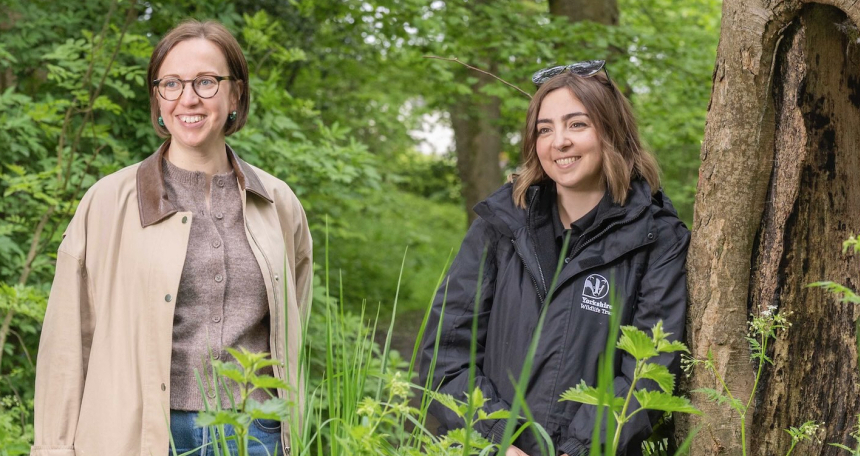
Yorkshire Wildlife Trust has undertaken a detailed biodiversity survey in the woodland located on the grounds of Yorkshire Building Society’s head office in Bradford. Covering around four hectares, the area stretches from the rear of the Yorkshire Drive offices through to neighbouring Parkside, forming a green corridor in a busy urban area.
The study forms part of Yorkshire Building Society’s commitment to improve the places colleagues, communities and members call home, aligned with its purpose of making good homes possible for more people. By better understanding the ecological value of the woodland, the mutual aims to support the long-term health of local habitats and contribute to nature recovery in the communities it serves.
Yorkshire Wildlife Trust - one of the region’s leading conservation charities - identified species present in the woodland, assessed habitat condition, and outlined opportunities to enhance biodiversity over time. Their work will help shape future habitat management and ensure the site’s natural assets can thrive.
The survey found that the woodland has an inherent high biodiversity value, particularly within the context of its location. It describes the area as ‘a pocket of natural woodland in a heavily urbanised landscape – likely to support a diverse assemblage of fauna including breeding birds foraging / commuting bats and other mammals’. Recommendations include the removal of invasive plants to improve ground flora and further specialist surveys to establish baseline and priority targets for the conservation of species such as bats.
Kate Livesey, Environment Manager at Yorkshire Building Society, said: “By caring for the places around us, we help make good homes and healthy communities possible for more people. We are proud to partner with Yorkshire Wildlife Trust to better understand and enhance the natural environment around our Bradford headquarters. This work reflects our belief that strong, thriving communities begin with the places we call home and supporting a healthy natural environment is at the centre of this.
“By investing in biodiversity and understanding how local habitats can flourish – even in our urban location – we’re helping to create greener, more resilient places for people and wildlife, today and for generations to come.”
Gabrielle Cruttenden, Nature Based Solutions Lead at Yorkshire Wildlife Trust, said, “Urban areas can play such an important role in nature’s network and support some of our much-loved species like swifts, hedgehogs and butterflies.
“Yorkshire Building Society have taken an important step to survey their grounds, to understand how best to protect and enhance it, helping nature flourish while strengthening the connection between people and the natural world right where they live and work. We are delighted to provide survey expertise and advice, and to find out what the grounds reveal.”
“With 3,000 species in Yorkshire at risk of extinction, every green space we can improve for nature is vital in our ambitions, and national targets to achieve 30% of Yorkshire being cared for, for nature.”
Yorkshire Wildlife Trust is dedicated to conserving, protecting, and restoring wildlife and wild places across the region. The biodiversity study supports the Trust’s contribution to the wider movement to secure a third of Yorkshire for nature, aligning with the UK’s 30 by 30 ambition - protecting and positively managing 30% of land, water, and sea for nature by 2030. The approach is backed by evidence showing that restoring at least 30% of natural habitats is essential to halting and reversing biodiversity loss.
