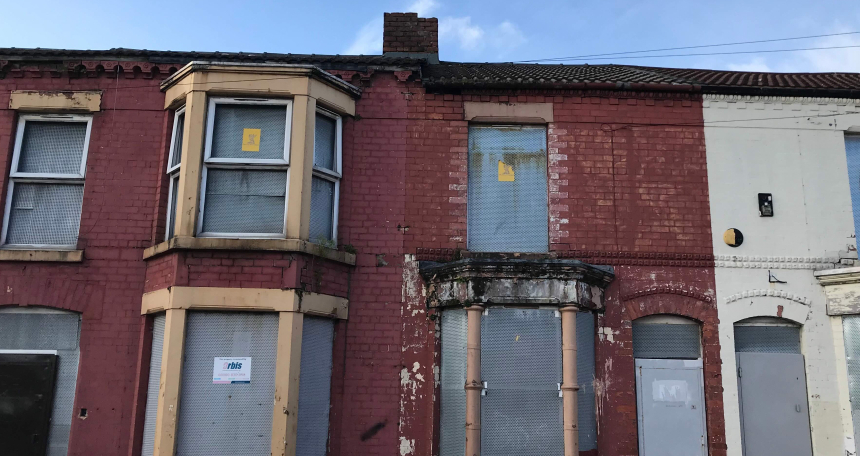
High street lenders are shutting the door on more than 1.5 million homes across Britain, branding them too risky for a standard mortgage. Yet for a growing army of buyers, those same properties represent a hidden opportunity.
Research from specialist lender Together has revealed 1.5 million homes—about six per cent of the UK's 28 million residential properties—would face rejection from many high street banks because they fail to fit traditional lending criteria.
For buyers hoping to scale the property ladder, the verdict can be brutal; a dream home identified, an offer accepted, and then a mortgage application stopped in its tracks, simply because of the type of property they’re looking to buy.
Thatched cottages, high rise apartments, homes too close to commercial premises or homes without workable kitchens or bathrooms may all be considered unmortgageable by banks’ automated processes.
Despite this a large proportion of savvy buyers are still determined to secure these types of properties, according to Together’s research. Among those who have purchased or strongly considered, 44% said that the property was more affordable and better value for money than buying a “traditional home”.
Almost a third (31%) were looking for a renovation or restoration project, while 28% saw an opportunity to add value and sell on the property later for profit.
In fact, just under a third were motivated by the risk-to-reward ratio, with 31% admitting they knew it would be difficult but worth it. Over a fifth (21%) said the rewards outweighed the risks. Nearly one in five (19%) said they were willing to take a chance that others weren’t. And just 12% admitted they either underestimated the challenge involved or weren’t fully aware of the risks at first.
The investment opportunity within these properties is also a strong motivation. Over a quarter (28%) of buyers cite the lower purchase price as the biggest attraction, rising to 32% for those purchasing the property as their main residence.
Another attraction is the rental income potential for these properties, which is the main attraction for 35% of those purchasing homes as a buy-to-let investment.
Yet enthusiasm alone does not solve the biggest challenge, which is securing finance.
Together’s research found that more than one in five buyers (21%) had already had a mortgage application rejected, while almost a third (32%) found themselves navigating a greatly reduced pool of lenders willing to consider their case.
For many would-be buyers, the experience is one of frustration. Properties that are perfectly habitable, and often in desirable locations, can become effectively inaccessible because they sit outside the narrow lending criteria used by mainstream banks.
The consequence is a substantial portion of Britain's housing stock remaining harder to buy, renovate and bring back into active use.
At a time when politicians are locked in debate over how to tackle the housing crisis, the issue raises an uncomfortable question - is Britain overlooking homes it already has?
While large-scale housebuilding remains central to solving the nation's housing shortage, campaigners and industry figures argue that bringing existing properties back into circulation could be just as important.
The UK's 1.5 million "unmortgageable" homes represent a vast pool of housing that, with investment and more flexible finance options, could help ease pressure on supply while breathing new life into neglected properties and communities.
Ryan Etchells, Chief Commercial Officer at Together, said: "One of the less visible challenges facing the UK property market is the sheer number of properties that mainstream lenders are reluctant to finance.
"That means a significant number of homes are effectively out of reach for ordinary buyers. While they don't feature in official housing shortage figures, they represent part of the wider supply problem and highlight the scale of investment needed to bring more homes back into the ‘mortgageable’ market.
"The good news is that there is a strong appetite among buyers who are prepared to take on these properties and invest in improvements. However, many are still unaware of the alternative finance options available to them. Greater awareness would help reduce declined applications and make it easier for people to unlock the potential of homes that traditional lenders often turn away from."
