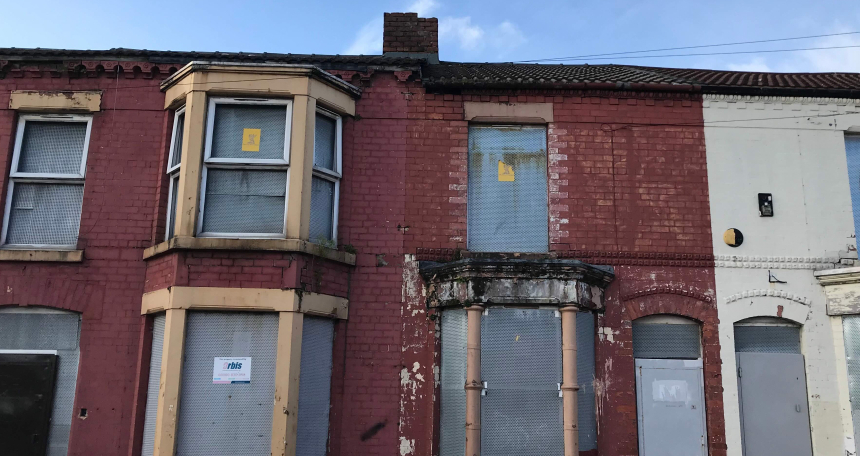
The potential cost of renovating the UK’s vacant property stock has risen to £34bn according to new research from BuildLoan.
The renovation finance provider says this represents an increase of 19 per cent year-on-year.
While BuildLoan says the average cost of renovating an average uninhabitable property is roughly £70,000, the cost of renovating long-term vacant properties is higher. BuildLoan data suggests the average cost of renovating a long-term vacant property is now approximately £95,000, up from £91,250 in 2025, and £87,500 in 2024.
There are roughly 361,000 long-term vacant properties in the UK, according to BuildLoan’s analysis of ONS data. This is an increase of approximately 15 per cent from 2025, when there were approximately 315,000 in the UK.
BuildLoan says the COVID‑19 pandemic initially disrupted housing transactions and renovation activity, leading some properties to remain vacant for longer than expected. The stamp duty holiday and pent‑up demand drove a temporary recovery in market activity. Now vacant property numbers have since begun to rise again. Recent increases reflect a combination of contributing factors including economic pressures, higher material costs, labour shortages, and longer‑term structural issues affecting the UK housing stock.
But BuildLoan says demand to undertake renovation projects is being driven by couples and young families looking to secure a home and add value while grappling with affordability pressures. Indeed, home improvement retailer Wickes recently reported that it was speeding up new store openings, announcing plans to open 70 new stores, creating 2,000 jobs.
In the past, it has been difficult to fund renovation projects as buyers had to rely on bridging loans if a property wasn’t in a fit state to secure a mortgage.
Now, to meet the demand for renovation projects, BuildLoan has launched a range of seven renovation products for properties regarded by most lenders as uninhabitable – and therefore unmortgageable – closing the gap between residential mortgages, bridging and heavy renovation finance.
The range, funded by several building societies (including Chorley Building Society, Furness Building Society, and the Stafford for Intermediaries) is suitable for lighter, non-structural works with a streamlined application process and reduced fee structure.
Chris Martin, head of product development and lender relationships at BuildLoan, said: “Our analysis suggests the number of long-term vacant properties in the UK has increased since 2025, having already risen steadily for a number of years. That represents a huge untapped resource for the housing sector – one that could potentially help solve the housing crisis. The problem has always been that there was never a mortgage designed for properties that would be regarded by most lenders are uninhabitable.”
“To be classed as habitable, properties need to have a working kitchen, bathroom and running water, although valuers often deem a property uninhabitable or unsuitable for a mortgage for other reasons. Mortgage brokers are taught that if a house isn’t habitable, it isn’t mortgageable. That’s no longer true. We can fund these renovations. Given how little progress we have made on building new homes over the last fifty years, renovating vacant properties should be part of the equation as we look to tackle the housing crisis.”
In October 2023, as part of his election manifesto, Keir Starmer promised to build 1.5 million new homes by August 2029. So far, only 340,000 have been delivered. Almost a third of the remaining 1,160,000 new homes yet to be built could be delivered by the private sector renovating the nation’s vacant homes.
Chris Martin said: “Since the late 1960s and the post-war building boom, the UK has consistently failed to build enough new homes. Governments have set plenty of new build targets – but those targets have not met. This new type of loan could potentially offer a private sector solution to the challenge posed by the nation’s housing crisis.”
